
Dataman Programmer Selection Guide
Which Programmer Do I Need?
Based upon your requirements you will be looking at a programmer in one of four categories. A low to medium cost universal programmer, a high end multi socket gang programmer, a specialised industrial programmer or a compact portable programmer. Below I will describe each type in more detail.
Universal
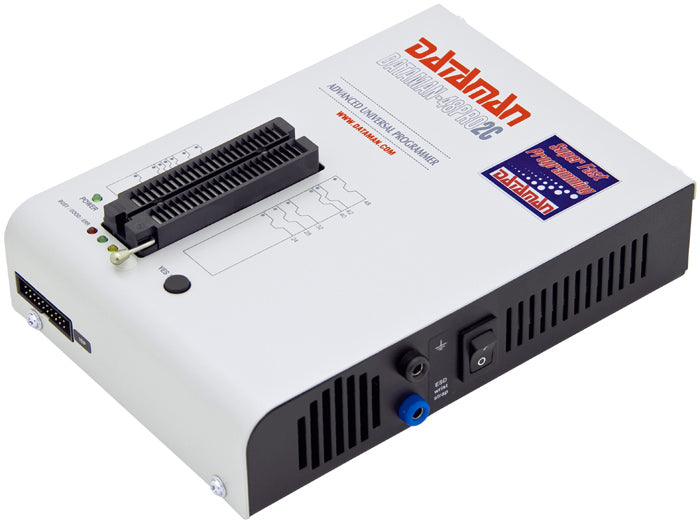
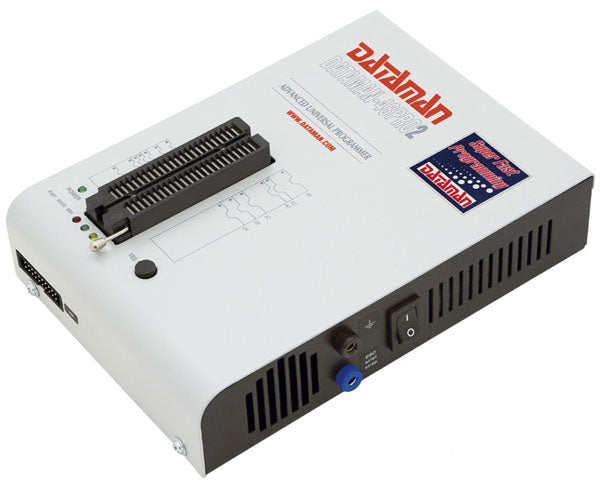
A universal programmer is basically capable of programming anything, it will have a 40-pin or 48-pin ZIF socket and independent pin drivers allowing voltages and signals to be applied to each pin. These programmers are considered low to medium cost and would suit someone working with many different types of devices. Programming houses or larger development companies working with many different memory/logic devices would benefit from the capabilities of this type of programmer, its an all in one solution.


Multi Socket
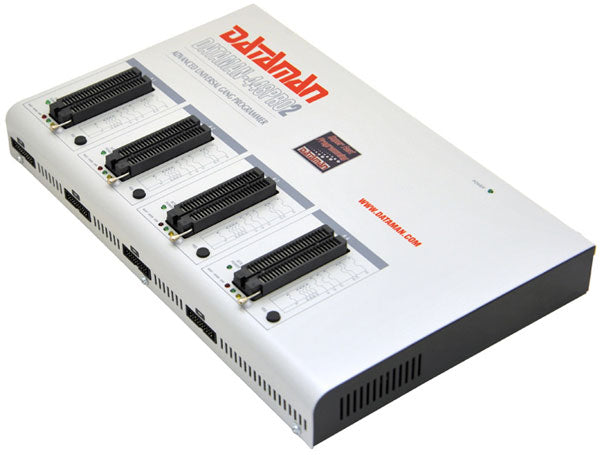
Gang programmers are based around the universal programmers but offer multiple sockets allowing 4 or more devices to be programmed at the same time giving a greater throughput where a large number of devices require programming. Mass production environments churning out tens of thousands of chips a week are where these programmers are typically found.


Industrial
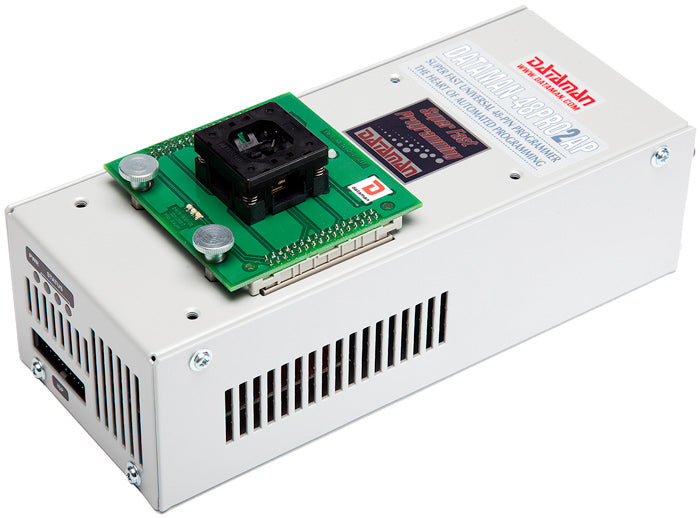
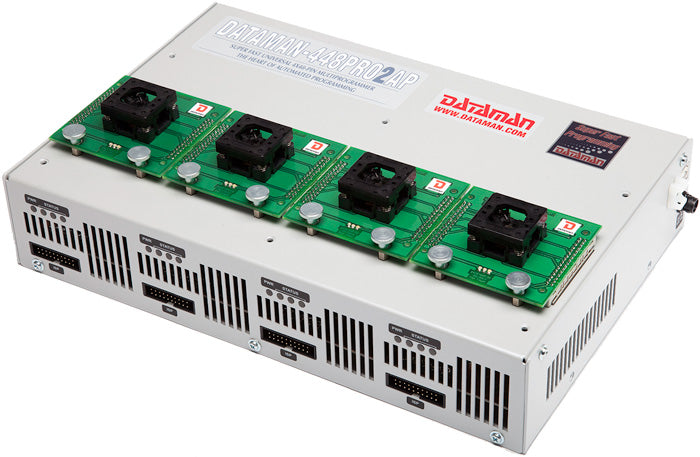
Industrial programmers are based around their desktop counterparts but in a form factor optimised for use in automated handlers and ATE machines. These programmers feature mechanically stable case designs with multiple fixing points for easy and secure integration. Their overall dimensions have been reduced to minimise the handler's arm movement and thus increase throughput. Specialised programming modules are also utilised to improve stability and give identical socket positioning, both during programming and after replacing the module.
Portable
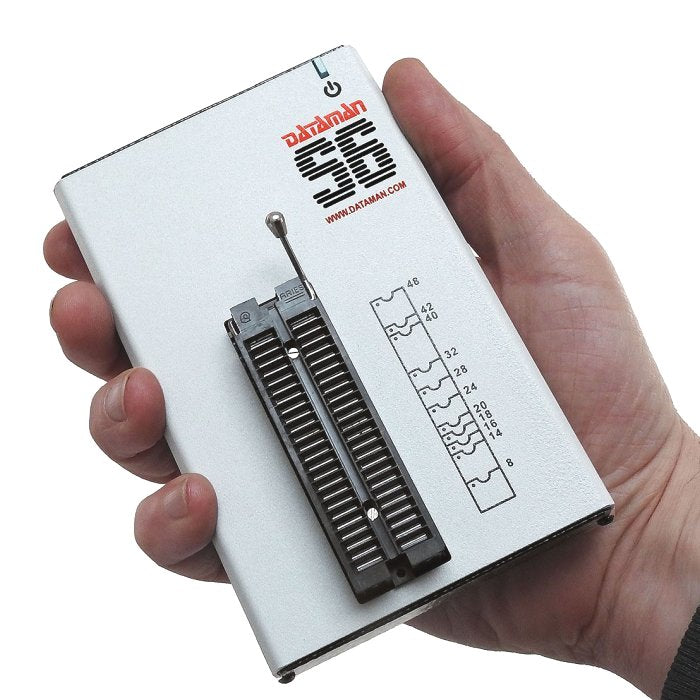
Portable programmers offer similar features to universal programmers, but in a compact and lightweight package. These programmers are USB powered and designed for use in the field with a laptop. They often include accessories for on-site usage such as a carry case for added protection.
I hope this summary of the four main categories will help you choose the type of programmer most suited to your programming needs.
Hardware Features
The latest generation of programmers have auto sensing 220/110v power supplies for safe use in any country. They utilize a USB 2.0 communication interface to the PC. They have protection against mains surge and ESD (Electrostatic Discharge) which can be fatal to the programmer and IC’s. Another major feature that is rapidly gaining popularity is the ISP interface port which allows programming of a device that is soldered into a product PCB (providing provisions have been made). This “In circuit Serial Programming” means there is no need to program the devices prior to product assembly. This method is also beneficial as it provides an easy interface for updating the software on a device without removing/de-soldering it from the application.
Control Software
Programmers are typically configured and operated through intuitive PC based user interface. Modern software provides you with all the relevant information about the selected device and allows you to setup any special configuration or protection options applicable to the device. It usually provides a log window with a history of operations that have been performed along with the results or any error messages that may have occurred. Commonly used commands such as Device Select, Read, Blank Check, Verify and Erase are accessed from an array of large buttons with graphics along the top of the interface. Other commands can be accessed via drop down menus or shortcut key combinations.


Device Support
The number of programmable devices supported by one of these latest generation of universal programmers is upwards of 140,000 and increasing all the time. Should you find a programmable device that is not listed on a universal programmer then we will make every effort to research the programming specifications and get it supported as soon as we can. This often happens within two weeks and in most cases is free of charge. An interim version of the software will be made available until the next full release is ready. As well as this “on demand” approach to device support we add at least 300 new devices to the software each month keeping us right up to date with all the latest devices and new technologies that are emerging.
Included Accessories
Along with the programmer itself you will get all of the cables and connectors that you need to get up and running. The control software is available from our website.
Warranty/Support
Any high quality microchip programmer should come with a warranty against failure. A typical warranty would cover the initial 3 years of operation including parts and labour. Support in this case refers to technical support provided by the programmer manufacturer. This would take the form of information on the manufacturer’s website, email or help over the telephone directly with a support technician. A technical support service is generally provided free of charge but this is worth checking.